The article “Artifical Intelligence: an Evangelical Statement of principles” is a summary of the way a Christian should approach the rapidly developing technology of ArtificialArtifical Intelligence.
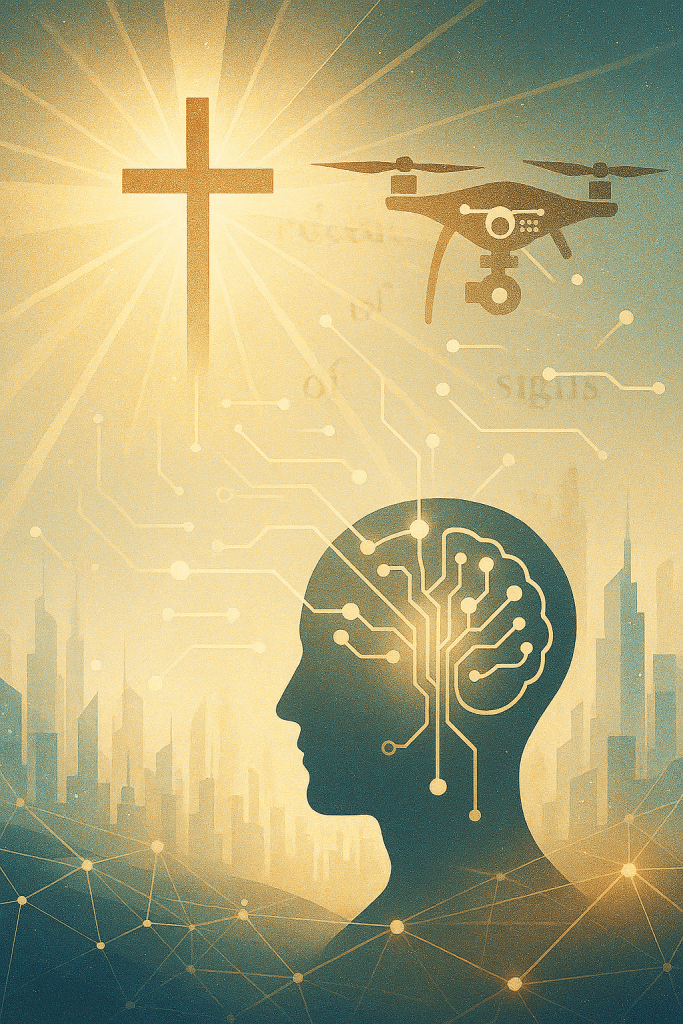
In these guidelines, the authors have a common theme of the value of the human experience. In essence, they state that human life and experience should come above all other forms of technology. Instead of using technology to become lazy, like in the Disney film Wall-E, we should instead use it to improve the human condition. AI is excellent at making connections between ideas. It is equally bad at creating new and unique ideas from presented information. This is why the authors state that it should be approached with caution.
In the “Humanitarian UAV Code of Conduct,” the authors present a perspective that appears decidedly unchristian. Rather than discussing the use of UAVs in the view of God’s creating, the article considers the use through a worldly lense of morals. The discussion is focused on providing humanitarian relief with UAVs in a moral way. The points in the article are an excellent baseline for approaching humanitarian relief efforts with UAVs.
In both documents, there are statements of particular interest. The overall theme of both writings that needs to be taken away is this: ensure human needs are always put above the needs of technology; only use technology as an available resource to accomplish goals. Specifically, when these goals involve the human condition. We must remember to keep the use of technology below the needs of the people we serve with it.
As I have learned in the UAS degree program at LeTourneau, there are countless ways to serve others through the use of unmanned aircraft. What I strive to do is effectively use UAVs within the agriculture industry. I want to research and develop the most effective ways to leverage this emerging technology for the production of food for the world. This is the original commission God gave us – to be stewards of the earth. I believe that it is important to have Christians within this industry to allow the creation of new technologies to be Christ centered. This is not in an overtly obvious way, but it is evident in the fruits of our labor.
If I were to create a LETU UAS Code of Conduct, I would draw from every part of scripture. From Genesis to Revelation there is wisdom to gain. Furthermore, I would draw from the AI Evangelical Statement of Principles. I believe there is a lot to be gained from drawing parallels between Artificial Intelligence and Unmanned Aircraft. Both technologies can be used for great good or unfortunate evil. This is a fact that needs be be addressed. Just as the LeTourneau flight program has the “LeTourneau way,” so we as UAV pilots should have the same principles. These beliefs will stay with each graduate for their entire lives, and subsequently have impacts ranging far and wide through the industry.
 Nicholas Foster | Autonomous Systems and Engineering
Leave a comment